Saturday, 21 March 2020

Key Facts

Know the facts about coronavirus disease 2019 (COVID-19) and help stop the spread of rumors.

1 Diseases can make anyone sick regardless of their race or ethnicity.
Fear and anxiety about COVID-19 can cause people to avoid or reject others even though they are not at risk for spreading the virus.

2 For most people, the immediate risk of becoming seriously ill from the virus that causes COVID-19 is thought to be low.

Older adults and people of any age who have serious underlying medical conditions may be at higher risk for more serious complications from COVID-19.

3 Someone who has completed quarantine or has been released from isolation does not pose a risk of infection to other people.

For up-to-date information, visit CDC’s coronavirus disease situation summary page.

4 There are simple things you can do to help keep yourself and others healthy.
  • Wash your hands often with soap and water for at least 20 seconds, especially after blowing your nose, coughing, or sneezing; going to the bathroom; and before eating or preparing food.
  • Avoid touching your eyes, nose, and mouth with unwashed hands.
  • Stay home when you are sick.
  • Cover your cough or sneeze with a tissue, then throw the tissue in the trash.
5 You can help stop COVID-19 by knowing the signs and symptoms:
  • Fever
  • Cough
  • Shortness of breath
Seek medical advice if you
  • Develop symptoms
AND
  • Have been in close contact with a person known to have COVID-19 or live in or have recently traveled from an area with ongoing spread of COVID-19. Call ahead before you go to a doctor’s office or emergency room. Tell them about your recent travel and your symptoms.


How to Take Care of Your Emotional Health?

It is natural to feel stress, anxiety, grief, and worry during and after a disaster. Everyone reacts differently, and your own feelings will change over time. Notice and accept how you feel. Taking care of your emotional health during an emergency will help you think clearly and react to the urgent needs to protect yourself and your family. Self-care during an emergency will help your long-term healing.
People with preexisting mental health conditions should continue with their treatment plans during an emergency and monitor for any new symptoms. Additional information can be found at the Substance Abuse and Mental Health Services Administration (SAMHSAexternal icon) website.

  • Substance Abuse and Mental Health Services Administration’s (SAMHSA’s) Disaster Distress Hotline: 1-800-985-5990 or text TalkWithThem to 66746.
  • People with deafness or hearing loss can use their preferred relay service to call 1-800-985-5990.

Take the following steps to cope with a disaster:
  • Take care of your body– Try to eat healthy well-balanced meals, exercise regularly, and get plenty of sleep. Avoid alcohol, tobacco, and other drugs. Learn more about wellness strategiesexternal icon for mental health.
  • Connect with others– Share your concerns and how you are feeling with a friend or family member. Maintain healthy relationships, and build a strong support system.
  • Take breaks– Make time to unwind and remind yourself that strong feelings will fade. Try taking in deep breaths. Try to do activities you usually enjoy.
  • Stay informed– When you feel that you are missing information, you may become more stressed or nervous. Watch, listen to, or read the news for updates from officials. Be aware that there may be rumors during a crisis, especially on social media. Always check your sources and turn to reliable sources of information like your local government authorities.
  • Avoid too much exposure to news– Take breaks from watching, reading, or listening to news stories. It can be upsetting to hear about the crisis and see images repeatedly. Try to do enjoyable activities and return to normal life as much as possible and check for updates between breaks.
  • Seek help when needed– If distress impacts activities of your daily life for several days or weeks, talk to a clergy member, counselor, or doctor, or contact the SAMHSA helpline at 1-800-985-5990.
Look out for these common signs of distress:
  • Feelings of numbness, disbelief, anxiety or fear.
  • Changes in appetite, energy, and activity levels.
  • Difficulty concentrating.
  • Difficulty sleeping or nightmares and upsetting thoughts and images.
  • Physical reactions, such as headaches, body pains, stomach problems, and skin rashes.
  • Worsening of chronic health problems.
  • Anger or short-temper.
  • Increased use of alcohol, tobacco, or other drugs.
f you experience these feelings or behaviors for several days in a row and are unable to carry out normal responsibilities because of them, seek professional help.

Manage Anxiety & Stress

Stress and Coping

The outbreak of coronavirus disease 2019 (COVID-19) may be stressful for people. Fear and anxiety about a disease can be overwhelming and cause strong emotions in adults and children. Coping with stress will make you, the people you care about, and your community stronger.
Everyone reacts differently to stressful situations.  How you respond to the outbreak can depend on your background, the things that make you different from other people, and  the community you live in.
People who may respond more strongly to the stress of a crisis include
  • Older people and people with chronic diseases who are at higher risk for COVID-19
  • Children and teens
  • People who are helping with the response to COVID-19, like doctors and other health care providers, or first responders
  • People who have mental health conditions including problems with substance use

Stress during an infectious disease outbreak can include
  • Fear and worry about your own health and the health of your loved ones
  • Changes in sleep or eating patterns
  • Difficulty sleeping or concentrating
  • Worsening of chronic health problems
  • Increased use of alcohol, tobacco, or other drugs
People with preexisting mental health conditions should continue with their treatment and be aware of new or worsening symptoms. Additional information can be found at the Substance Abuse and Mental Health Services Administration (SAMHSAexternal icon) website.

Taking care of yourself, your friends, and your family can help you cope with stress. Helping others cope with their stress can also make your community stronger.
Things you can do to support yourself
  • Take breaks from watching, reading, or listening to news stories, including social media. Hearing about the pandemic repeatedly can be upsetting.
  • Take care of your body. Take deep breaths, stretch, or meditate. Try to eat healthy, well-balanced meals, exercise regularly, get plenty of sleep, and avoid alcohol and drugs.
  • Make time to unwind. Try to do some other activities you enjoy.
  • Connect with others. Talk with people you trust about your concerns and how you are feeling.
Call your healthcare provider if stress gets in the way of your daily activities for several days in a row.

Reduce stress in yourself and others

Sharing the facts about COVID-19 and understanding the actual risk to yourself and people you care about can make an outbreak less stressful..
When you share accurate information about COVID-19 you can help make people feel less stressed and allow you to connect with them.
Learn more about taking care of your emotional health.

For parents

Children and teens react, in part, on what they see from the adults around them. When parents and caregivers deal with the COVID-19 calmly and confidently, they can provide the best support for their children. Parents can be more reassuring to others around them, especially children, if they are better prepared.
Not all children and teens respond to stress in the same way. Some common changes to watch for include
  • Excessive crying or irritation in younger children
  • Returning to behaviors they have outgrown (for example, toileting accidents or bedwetting)
  • Excessive worry or sadness
  • Unhealthy eating or sleeping habits
  • Irritability and “acting out” behaviors in teens
  • Poor school performance or avoiding school
  • Difficulty with attention and concentration
  • Avoidance of activities enjoyed in the past
  • Unexplained headaches or body pain
  • Use of alcohol, tobacco, or other drugs
There are many things you can do to support your child
  • Take time to talk with your child or teen about the COVID-19 outbreak. Answer questions and share facts about COVID-19 in a way that your child or teen can understand.
  • Reassure your child or teen that they are safe. Let them know it is ok if they feel upset. Share with them how you deal with your own stress so that they can learn how to cope from you.
  • Limit your family’s exposure to news coverage of the event, including social media. Children may misinterpret what they hear and can be frightened about something they do not understand.
  • Try to keep up with regular routines. If schools are closed, create a schedule for learning activities and relaxing or fun activities.
  • Be a role model.  Take breaks, get plenty of sleep, exercise, and eat well. Connect with your friends and family members.

For responders

Responding to COVID-19 can take an emotional toll on you. There are things you can do to reduce secondary traumatic stress (STS) reactions:
  • Acknowledge that STS can impact anyone helping families after a traumatic event.
  • Learn the symptoms including physical (fatigue, illness) and mental (fear, withdrawal, guilt).
  • Allow time for you and your family to recover from responding to the pandemic.
  • Create a menu of personal self-care activities that you enjoy, such as spending time with friends and family, exercising, or reading a book.
  • Take a break from media coverage of COVID-19.
  • Ask for help if you feel overwhelmed or concerned that COVID-19 is affecting your ability to care for your family and patients as you did before the outbreak.
Learn more tips for taking care of yourself during emergency response.

For people who have been released from quarantine

Being separated from others if a healthcare provider thinks you may have been exposed to COVID-19 can be stressful, even if you do not get sick. Everyone feels differently after coming out of quarantine. Some feelings include :
  • Mixed emotions, including relief after quarantine
  • Fear and worry about your own health and the health of your loved ones
  • Stress from the experience of monitoring yourself or being monitored by others for signs and symptoms of COVID-19
  • Sadness, anger, or frustration because friends or loved ones have unfounded fears of contracting the disease from contact with you, even though you have been determined not to be contagious
  • Guilt about not being able to perform normal work or parenting duties during quarantine
  • Other emotional or mental health changes
Children may also feel upset or have other strong emotions if they, or someone they know, has been released from quarantine.


Reducing Stigma

Public health emergencies, such as the outbreak of coronavirus disease 2019 (COVID-19), are stressful times for people and communities. Fear and anxiety about a disease can lead to social stigma (1) toward people, places, or things. For example, stigma and discrimination can occur when people associate a disease, such as COVID-19, with a population or nationality, even though not everyone in that population or from that region is specifically at risk for the disease. Stigma can also occur after a person has been released from COVID-19 quarantine even though they are not considered a risk for spreading the virus to others.

Some groups of people who may be experiencing stigma because of COVID-19 include:
  • Persons of Asian descent
  • People who have traveled
  • Emergency responders or healthcare professionals
Stigma hurts everyone by creating fear or anger towards other people.
Stigmatized groups may be subjected to:
  • Social avoidance or rejection
  • Denials of healthcare, education, housing or employment
  • Physical violence.

Stigma affects the emotional or mental health (2) of stigmatized groups and the communities they live in. Stopping stigma is important to making communities and community members resilient (3). See resources on mental health and coping during COVID-19.

Everyone can help stop stigma related to COVID-19 by knowing the facts and sharing them with others in your community.

Communicators and public health officials can help counter stigma during the COVID-19 response.

  • Maintain privacy and confidentiality of those seeking healthcare and those who may be part of any contact investigation.
  • Quickly communicate the risk or lack of risk from associations with products, people, and places.
  • Raise awareness about COVID-19 without increasing fear.
  • Share accurate information about how the virus spreads.
  • Speak out against negative behaviors, including negative statements on social media about groups of people, or exclusion of people who pose no risk from regular activities.
  • Be cautious about the images that are shared. Make sure they do not reinforce stereotypes.
  • Engage with stigmatized groups in person and through media channels including news media and social media.
  • Thank healthcare workers and responders. People who have traveled to areas where the COVID-19 outbreak is happening to help have performed a valuable service to everyone by helping make sure this disease does not spread further.
  • Share the need for social support for people who have returned from China or are worried about friends or relatives in the affected region.


Testing for COVID-19

Call your doctor:  If you think you have been exposed to COVID-19 and develop a fever and symptoms, such as cough or difficulty breathing, call your healthcare provider for medical advice.

There are laboratory tests that can identify the virus that causes COVID-19 in respiratory specimens. State and local public health departments have received tests from CDC while medical providers are getting tests developed by commercial manufacturers. All of these tests are Real-Time Reverse Transcriptase (RT)-PCR Diagnostic Panels, that can provide results in 4 to 6 hours.
Not everyone needs to be tested for COVID-19. Here is some information that might help in making decisions about seeking care or testing.
  • Most people have mild illness and are able to recover at home.
  • There is no treatment specifically approved for this virus.
  • Testing results may be helpful to inform decision-making about who you come in contact with.
CDC has guidance for who should be tested, but decisions about testing are at the discretion of state and local health departments and/or individual clinicians.
  • Clinicians should work with their state and local health departments to coordinate testing through public health laboratories, or work with clinical or commercial laboratories.
If you have symptoms of COVID-19 and want to get tested, try calling your state or local health department or a medical provider. While supplies of these tests are increasing, it may still be difficult to find a place to get tested.
  • If you test positive for COVID-19, see If You Are Sick or Caring for Someone.
  • If you test negative for COVID-19, you probably were not infected at the time your specimen was collected. However, that does not mean you will not get sick. It is possible that you were very early in your infection at the time of your specimen collection and that you could test positive later, or you could be exposed later and then develop illness. In other words, a negative test result does not rule out getting sick later. CDC expects that widespread transmission of COVID-19 in the United States will occur. In the coming months, most of the U.S. population will be exposed to this virus. You should continue to practice all the protective measures recommended to keep yourself and others free from illness.

If you are very sick get medical attention immediately

If you develop emergency warning signs for COVID-19 get medical attention immediately. Emergency warning signs include*:
  • Trouble breathing
  • Persistent pain or pressure in the chest
  • New confusion or inability to arouse
  • Bluish lips or face
*This list is not all inclusive. Please consult your medical provider for any other symptoms that are severe or concerning.

Is there any treatment?


There is no specific antiviral treatment for COVID-19.People with COVID-19 can seek medical care to help relieve symptoms. Doctors are using combination of medicines to cure this.

Is there any Vaccine?


There is currently no vaccine to protect against COVID-19. The best way to prevent infection is to take everyday preventive actions, like avoiding close contact with people who are sick and washing your hands often

People who are at higher risk of getting very sick

Group of people at higher risk
 
Groups at higher risk
 
 
Older adults and people of any age who have serious underlying medical conditions may be at higher risk for more serious complications from COVID-19. These people who may be at higher risk of getting very sick from this illness, includes:
  • Older adults
  • Kids
  • Pregnant Woman
  • People who have serious underlying medical conditions like:
    • Heart disease
    • Diabetes
    • Lung disease
    • Asthma
    • HIV 


Steps to help prevent the spread of COVID-19 if you are sick

Follow the steps below:  If you are sick with COVID-19 or think you might have it, follow the steps below to help protect other people in your home and community.


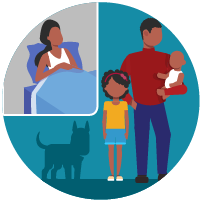
man in bedStay home except to get medical care
family separated
  • Stay home: People who are mildly ill with COVID-19 are able to recover at home. Do not leave, except to get medical care. Do not visit public areas.
  • Stay in touch with your doctor. Call before you get medical care. Be sure to get care if you feel worse or you think it is an emergency.
  • Avoid public transportation: Avoid using public transportation, ride-sharing, or taxis.


Separate yourself from other people in your home, this is known as home isolation
  • Stay away from others: As much as possible, you should stay in a specific “sick room” and away from other people in your home. Use a separate bathroom, if available.
  • Limit contact with pets & animals: You should restrict contact with pets and other animals, just like you would around other people.
    • Although there have not been reports of pets or other animals becoming sick with COVID-19, it is still recommended that people with the virus limit contact with animals until more information is known.
    • When possible, have another member of your household care for your animals while you are sick with COVID-19. If you must care for your pet or be around animals while you are sick, wash your hands before and after you interact with them.

Wear a facemask if you are sick
  • If you are sick: You should wear a facemask when you are around other people and before you enter a healthcare provider’s office.
  • If you are caring for others: If the person who is sick is not able to wear a facemask (for example, because it causes trouble breathing), then people who live in the home should stay in a different room. When caregivers enter the room of the sick person, they should wear a facemask. Visitors, other than caregivers, are not recommended.
Cover your coughs and sneezes
  • Cover: Cover your mouth and nose with a tissue when you cough or sneeze.
  • Dispose: Throw used tissues in a lined trash can.
  • Wash hands: Immediately wash your hands with soap and water for at least 20 seconds. If soap and water are not available, clean your hands with an alcohol-based hand sanitizer that contains at least 60% alcohol.
Clean your hands often
  • Wash hands: Wash your hands often with soap and water for at least 20 seconds. This is especially important after blowing your nose, coughing, or sneezing; going to the bathroom; and before eating or preparing food.
  • Hand sanitizer: If soap and water are not available, use an alcohol-based hand sanitizer with at least 60% alcohol, covering all surfaces of your hands and rubbing them together until they feel dry.
  • Soap and water: Soap and water are the best option, especially if hands are visibly dirty.
  • Avoid touching: Avoid touching your eyes, nose, and mouth with unwashed hands.


How to protect yourself?


Know How it Spreads

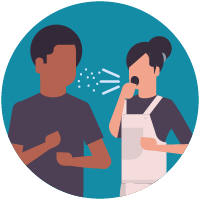
    Illustration: woman sneezing on man
  • There is currently no vaccine to prevent coronavirus disease 2019 (COVID-19).
  • The best way to prevent illness is to avoid being exposed to this virus.
  • The virus is thought to spread mainly from person-to-person.
    • Between people who are in close contact with one another (within about 6 feet).
    • Through respiratory droplets produced when an infected person coughs or sneezes.
  • These droplets can land in the mouths or noses of people who are nearby or possibly be inhaled into the lungs.

    Take steps to protect others

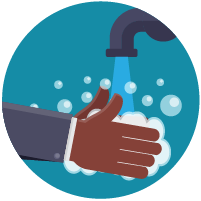
    Illustration: washing hands with soap and water

    Clean your hands often

    • Wash your hands often with soap and water for at least 20 seconds especially after you have been in a public place, or after blowing your nose, coughing, or sneezing.
    • If soap and water are not readily available, use a hand sanitizer that contains at least 60% alcohol. Cover all surfaces of your hands and rub them together until they feel dry.
    • Avoid touching your eyes, nose, and mouth with unwashed hands.


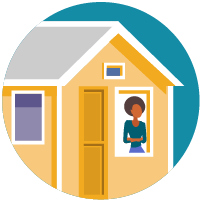
    Illustration: Woman quarantined to her home
    man in bed


    Avoid close contact

    • Avoid close contact with people who are sick
    • Put distance between yourself and other people if COVID-19 is spreading in your community. This is especially important for people who are at higher risk of getting very sick.


    Take steps to protect others

    Stay home if you’re sick

    • Stay home if you are sick, except to get medical care. Learn what to do if you are sick.


    woman covering their mouth when coughing


     Cover coughs and sneezes

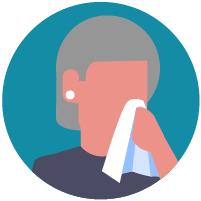
    • Cover your mouth and nose with a tissue when you cough or sneeze or use the inside of your elbow.
    • Throw used tissues in the trash.
    • Immediately wash your hands with soap and water for at least 20 seconds. If soap and water are not readily available, clean your hands with a hand sanitizer that contains at least 60% alcohol.


    man wearing a mask


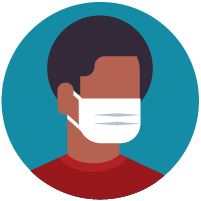
    Wear a facemask if you are sick

    • If you are sick: You should wear a facemask when you are around other people (e.g., sharing a room or vehicle) and before you enter a healthcare provider’s office. If you are not able to wear a facemask (for example, because it causes trouble breathing), then you should do your best to cover your coughs and sneezes, and people who are caring for you should wear a facemask if they enter your room. 
    • If you are NOT sick: You do not need to wear a facemask unless you are caring for someone who is sick (and they are not able to wear a facemask). Facemasks may be in short supply and they should be saved for caregivers.

    cleaning a counter                                                   

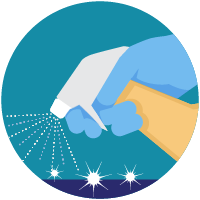
     Clean and disinfect

    • Clean AND disinfect frequently touched surfaces daily. This includes tables, doorknobs, light switches, countertops, handles, desks, phones, keyboards, toilets, faucets, and sinks.
    • If surfaces are dirty, clean them: Use detergent or soap and water prior to disinfection.

How does COVID-19 spread?

Person-to-person spread

The virus is thought to spread mainly from person-to-person.
  • Between people who are in close contact with one another (within about 6 feet).
  • Through respiratory droplets produced when an infected person coughs or sneezes.
These droplets can land in the mouths or noses of people who are nearby or possibly be inhaled into the lungs.
 

   Can someone spread the virus without being sick?

  • People are thought to be most contagious when they are most symptomatic (the sickest).
  • Some spread might be possible before people show symptoms; there have been reports of this occurring with this new coronavirus, but this is not thought to be the main way the virus spreads.

Spread from contact with contaminated surfaces or objects

It may be possible that a person can get COVID-19 by touching a surface or object that has the virus on it and then touching their own mouth, nose, or possibly their eyes, but this is not thought to be the main way the virus spreads.

How easily the virus spreads

How easily a virus spreads from person-to-person can vary. Some viruses are highly contagious (spread easily), like measles, while other viruses do not spread as easily. Another factor is whether the spread is sustained, spreading continually without stopping.
The virus that causes COVID-19 seems to be spreading easily and sustainably in the community (“community spread”) in some affected  geographic areas.

What are the signs and symptoms of COVID -19?


Patients with COVID-19 have had mild to severe respiratory illness with symptoms of:


Fever
Cough
Shortness of breath


In more severe cases, infection can cause pneumonia, severe acute respiratory syndrome, kidney failure and even death. 

Image result for symptoms of COVID -19?

What are 4 stages of COVID -19

Stage 1: When cases are only imported from affected countries and therefore only those who have travelled abroad test positive. At this stage there is no spread of the disease locally.  

Stage 2: When there is local transmission from infected persons. This will usually be relatives or acquaintances of those who travelled abroad who test positive after close contact with the infected person.At this stage, fewer people are affected, the source of the virus is known and is therefore easier to perform contact tracing and contain the spread via self-quarantining. Countries like India are currently in Stage 2.  

Stage 3: This is the stage of community transmission. In this stage those who have not been exposed to an infected person or anyone who has a travel history to affected countries, still test positive. In other words, people are unable to identify where they might have picked up the virus from. Countries like Singapore, Italy and Spain are currently in Stage 3.    

Stage 4: This is the worst stage of the infection where it takes on the form of an epidemic. Massive numbers are infected and it is very difficult to control and contain the spread. This is what China dealt with.